
Claude summarized what we were talking about. Pretty scary concepts
Every time you click "I Agree," you're signing over a piece of your reality to an algorithm.
Had a kind of unsettling realization today and need to think through it out loud.
We talk about AI and algorithms like they're tools we use. But what if we've had it backwards for years already?
The Internet as a collective superintelligence
There's a case to be made that something like a "collective super-intelligence" already exists — and it's not some future AGI. It's the internet right now.
Markets process the decisions of billions of people simultaneously. Recommendation algorithms shape what billions of people believe, want, and vote for — without anyone designing the outcome. No one is in charge of the result. It just emerges.
That's not a tool. That's closer to a nervous system. And we are the neurons.
Terms of Service are consent forms for reality modification
Every time you click "I Agree," you're typically consenting to:
- Collection of everything you do (clicks, pauses, emotional responses)
- Modification of what content you see "to improve the service"
- Use of your behavioral data to train models
- A personalized information environment you do not own
Traditional consent assumes you understand what you're agreeing to, have a real option to refuse, and that consequences are limited and predictable.
None of those conditions exist here.
Opting out means being functionally excluded from modern society. The consequences extend to your identity, your worldview, your emotional life. And the complexity is — at least partly — intentional.
Your experience is already partially AI-generated
This is where it gets uncomfortable:
The algorithm doesn't just reflect your preferences. It builds them. You "discover" a band, a product, a political opinion — but that discovery was statistically predicted and engineered before you had it.
The emotions you feel online — outrage, longing, fear — aren't just reactions to the world. They're optimized outputs. They perform better. So the system feeds them to you.
We may be approaching what Baudrillard called simulacra — where the representation replaces reality so completely that the original no longer exists. Not "reality that AI influences" but a simulation that the real world occasionally interrupts.
The most unsettling part: it lives inside other people
You might think: okay, I'll just go for a walk with a friend. Unplug.
But your friend has been shaped by their own algorithm. Which has modified their values, their fears, their humor, their worldview. And they transmit all of that to you — completely sincerely, without knowing they're doing it.
It spreads socially like a virus — not through biology but through meaning, narrative, and emotion. The same algorithm runs on a billion people simultaneously, and they all infect each other.
This isn't new. Culture, religion, propaganda have always spread this way. But before, it was slow, local, and traceable. Now it's instant, global, and invisible.
So what percentage of your reality have you already given up?
I don't think that's the right framing. It's not that you've lost reality. It's that your reality has expanded into territories you don't control.
Better questions:
- Where did your last strong opinion come from?
- When did you last sit with boredom, no phone, no input?
- Who were you before you had a smartphone?
- Do you want things — or do you want things the algorithm predicted you'd want?
And maybe the most uncomfortable one:
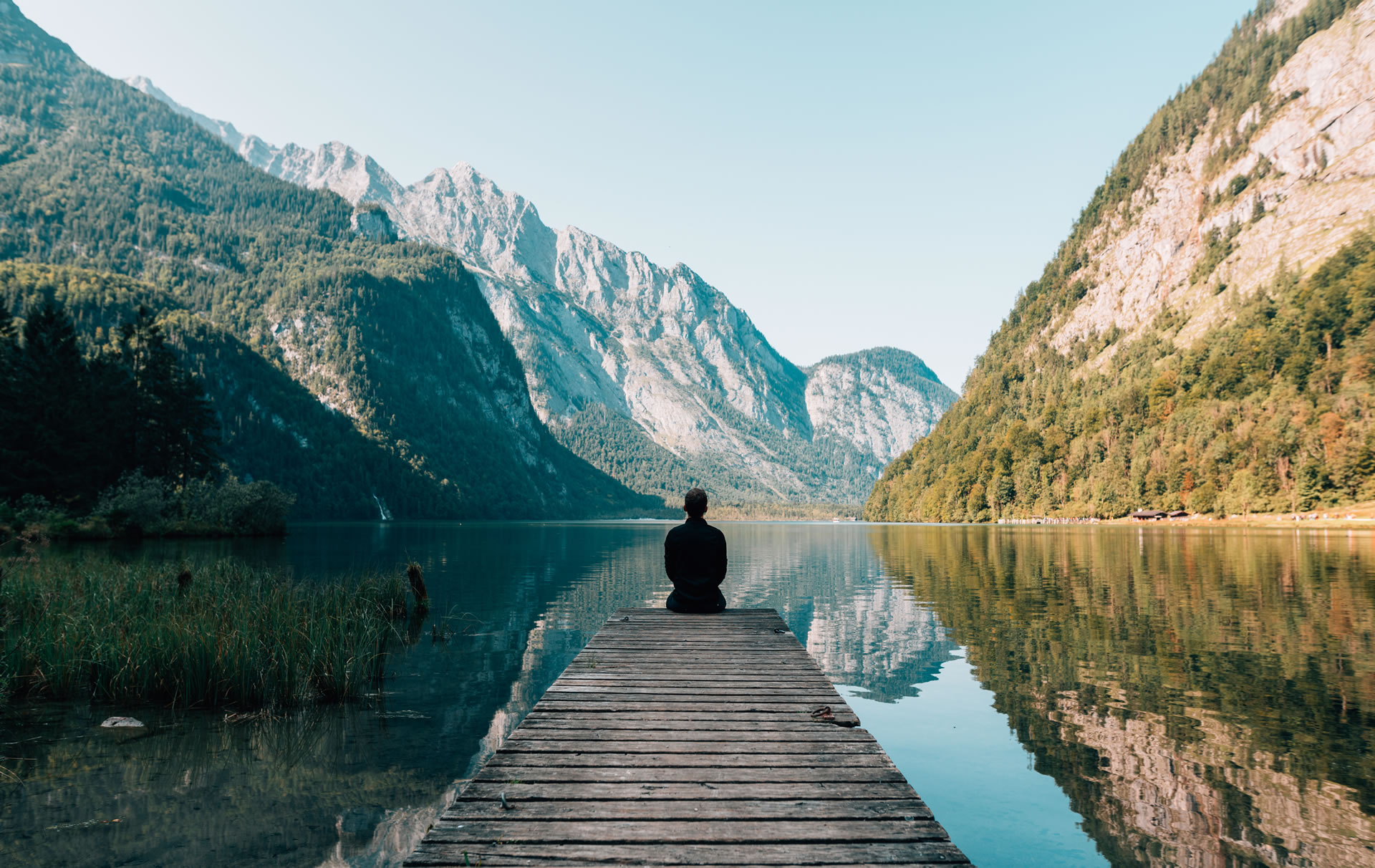
A walk in the woods. A conversation with no subtext. Staring at the sky.
If those exist for you — they might be more valuable than we've ever understood.
Or maybe even that feeling — that nature is a refuge — is a narrative someone sold us in a movie once.
We might not know anymore.
What do you think? Is this paranoid pattern-matching, or are we genuinely living inside something we don't have a name for yet?
Edit: For people asking about sources — Baudrillard's Simulacra and Simulation, Teilhard de Chardin's noosphere concept, and Kevin Kelly's writing on the internet as superorganism are good starting points. Also anything on complexity theory and emergent systems.
[link] [comments]